
Dental Crowns in London, ON
Dental Crowns Near You
A badly damaged or weakened tooth can make chewing uncomfortable and may become more difficult to restore if additional tooth structure is lost. At Northland Dental, we provide dental crowns in London, ON, to restore and protect suitable teeth when a filling or another smaller restoration may not provide enough support.
Restorative treatment is easier to manage when you can receive care close to home. If you are looking for dental crowns near you, our team can assess the affected tooth and explain whether a crown is appropriate for your needs.
What Are Dental Crowns?
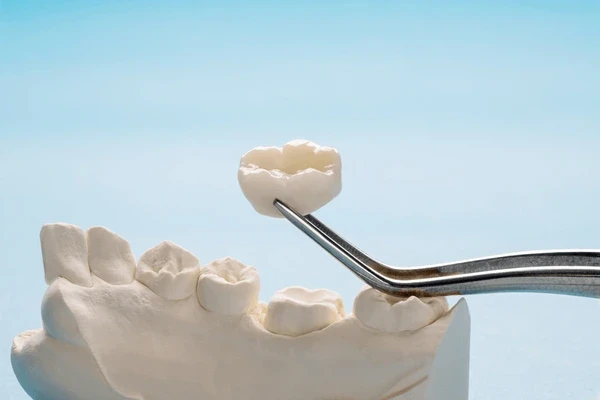
A dental crown is a custom restoration that covers the visible portion of a tooth. Crowns are commonly used when a tooth has lost a significant amount of structure because of decay, fracture, wear, or previous treatment
A crown can restore the tooth’s shape, provide support for weakened tooth structure, and create a functional chewing surface. Crowns can be made from different dental materials, and the most appropriate choice depends on factors such as the tooth’s location, bite forces, appearance, and remaining natural structure.
If you are looking for a dependable dentist near you for dental crowns in London, ON, we can examine the tooth and determine whether a crown or another restoration may be more suitable.
When Might You Need a Dental Crown?
Consider visiting our dentist in London, ON, if:
A tooth has a large area of decay.
A tooth is cracked, fractured, or badly worn.
A large filling has weakened the remaining tooth structure.
A tooth has undergone root canal treatment and needs additional protection.
An existing crown is loose, damaged, or worn.
A tooth needs to support certain types of dental restorations.
The shape or appearance of a damaged tooth needs to be restored.
What Are the Benefits of Dental Crowns?
Restored Strength
A crown can reinforce a tooth that has lost a significant amount of natural structure.
Improved Function
Restoring the tooth’s shape can help improve biting and chewing.
Added Protection
Covering a weakened tooth can help protect the remaining structure from everyday forces.
Custom Fit
Each crown is designed to fit the prepared tooth and work with the surrounding bite.
Natural Appearance
Tooth-coloured materials can be selected to coordinate with nearby teeth when appearance is important.
If you want to learn more about dental crowns in London, ON, contact Northland Dental.
How Does the Dental Crown Process Work?
Assessing the Tooth
We examine the tooth, surrounding gums, bite, and existing dental work to determine whether a crown is appropriate.
Taking Images When Needed
We may use dental X-rays to evaluate areas of the tooth and root that cannot be assessed visually.
Numbing the Area
We use local anaesthetic when needed to help keep you comfortable during tooth preparation.
Preparing the Tooth
We reshape the damaged tooth as necessary to create enough space and support for the crown.
Capturing Dental Records
We take a digital scan or impression so the crown can be made to fit the prepared tooth and surrounding teeth.
Protecting the Tooth
If the final crown is not placed during the same visit, we may place a temporary restoration to protect the prepared tooth in the meantime
Placing the Crown
We check the crown’s fit, appearance, and contact with nearby teeth before securing it in place.
Checking Your Bite
We make any necessary adjustments so the crown feels comfortable when you bite and chew.
How to Care for Your Smile After Getting a Dental Crown
Wait until numbness has worn off before chewing if local anaesthetic was used.
Brush the crowned tooth twice daily with fluoride toothpaste.
Clean carefully between the crown and neighbouring teeth every day.
Avoid biting ice, pens, or other very hard objects.
Follow any specific instructions we provide if you are wearing a temporary crown.
Contact us if the crown feels loose, breaks, or makes your bite feel uneven.
Attend recommended dental visits so we can monitor the crown and the tooth underneath it.
Why Choose Northland Dental for Dental Crowns?
At Northland Dental, we offer dental crowns near you so restorative treatment can fit more conveniently into your ongoing dental care. Our clinic provides:
Easy Clinic Access
Free parking and wheelchair accessibility make visits more convenient.
CDCP Accepted
We accept patients covered through the Canadian Dental Care Plan.
Select Saturday Visits
Saturday appointments are available on select dates.
Care for Every Age
We welcome children, adults, and older adults to our clinic.
Personalized Recommendations
We base treatment decisions on the condition of your tooth and your individual needs.
Straightforward Explanations
We explain our findings and treatment options clearly before moving forward.
Restore and Protect a Damaged Tooth
A weakened tooth does not always require the same type of restoration. An examination can help determine how much healthy structure remains and which treatment is most appropriate. At Northland Dental, we provide dental crowns near you to help restore damaged teeth and support comfortable function.
Call us at (519) 455-2551, email us at info@northlanddental.com, or visit us at 1295 Highbury Ave N, London, ON N5Y 5L3, Canada to book your consultation.
FAQs
How long can a dental crown last?
There is no fixed lifespan for a crown. How long it remains functional depends on the crown material, the condition of the underlying tooth, bite forces, oral hygiene, habits such as grinding, and normal wear over time.
Can I get a crown if very little of my tooth is left?
Possibly. The tooth needs enough healthy structure and support for the planned restoration. In some cases, additional treatment may be needed before a crown can be placed, while severely damaged teeth may not be restorable.
Can a crowned tooth still develop decay?
Yes. The crown itself cannot develop a cavity, but the natural tooth underneath and around its edges can still decay. Brushing, cleaning between the teeth, and ongoing dental assessments remain important.
Why does my crown feel different when I bite?
A new crown may initially feel slightly different, but it should not continue to feel unusually high or interfere with your bite. Contact us if biting feels uncomfortable so we can assess the crown and make adjustments if necessary.
Can a dental crown be repaired if it chips?
It depends on the material, location, and extent of the damage. Minor damage may be repairable, while a more significant fracture may require replacing the crown.
What happens if my dental crown comes off?
Keep the crown if you can find it and contact us for an assessment. Avoid chewing on the affected tooth and do not use household glue to reattach the crown. We need to examine both the crown and underlying tooth before deciding whether it can be recemented or needs replacement.