
Root Canal Treatment in London, ON
Root Canal Treatment Near You
Deep decay, a crack, or an injury can sometimes affect the soft tissue inside a tooth and lead to pain or infection. At Northland Dental, we provide root canal treatment in London, ON, to treat the affected tissue and help preserve a natural tooth when it can be restored.
If you are looking for root canal treatment near you, our team can examine the tooth, identify the source of the problem, and explain your treatment options.
What Is Root Canal Treatment?
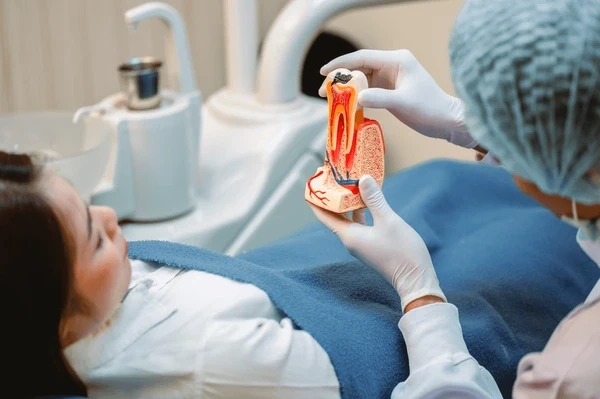
Root canal treatment is used when the pulp inside a tooth becomes inflamed, infected, or no longer healthy enough to recover. The pulp contains nerves, blood vessels, and connective tissue within the centre of the tooth and its roots.
Treatment removes the affected pulp from inside the tooth so the internal space can be cleaned and sealed. The goal is to manage the source of the problem while preserving the natural tooth when possible. Whether a tooth can be treated successfully depends on factors such as its remaining structure, root condition, and surrounding bone and gums.
If you are looking for a dependable dentist near you for root canal treatment in London, ON, we can evaluate the affected tooth and determine whether this treatment may be appropriate.
When Might You Need Root Canal Treatment?
Consider visiting our dentist in London, ON, if:
You have persistent or severe tooth pain.
Sensitivity to hot or cold lingers after the stimulus is removed.
A tooth hurts when you bite or chew.
You notice swelling or tenderness around a tooth.
A pimple-like bump develops on the nearby gum.
A tooth becomes darker after an injury.
Deep decay, a crack, or trauma has affected the pulp.
These symptoms can have several causes, so an examination is needed to determine what is happening inside the tooth.
What Are the Benefits of Root Canal Treatment?
Natural Tooth Preservation
Treatment may allow a damaged or infected tooth to remain in your mouth instead of being removed.
Source Management
Removing unhealthy pulp addresses the tissue causing inflammation or infection inside the tooth.
Improved Comfort
Treating the affected tooth can help resolve pain caused by an inflamed or infected pulp.
Restored Function
After the tooth is properly restored, it can continue to support normal biting and chewing.
Protection of Remaining Structure
Completing the appropriate final restoration helps protect the treated tooth from further damage.
If you want to learn more about root canal treatment in London, ON, contact Northland Dental.
How Does the Root Canal Treatment Process Work?
Assessing the Tooth
We examine your symptoms, tooth, gums, bite, and dental history to determine the likely source of the problem.
Taking Dental Images
We use X-rays when needed to evaluate the roots, surrounding bone, and internal tooth anatomy.
Numbing the Area
We use local anaesthetic to help keep you comfortable during the procedure.
Accessing the Pulp
We create a small opening in the tooth so we can reach the affected tissue inside.
Cleaning the Canals
We remove the unhealthy pulp and carefully clean and shape the spaces within the roots.
Sealing the Tooth
We fill and seal the cleaned canals to reduce the risk of bacteria entering the internal space again.
Restoring the Tooth
We place or plan an appropriate restoration to protect the remaining tooth structure and restore function.
Monitoring Healing
We may recommend follow-up care to check how the tooth and surrounding tissues are responding.
What to Expect After Your Visit
Wait until the numbness wears off before chewing to avoid accidentally biting your cheek or tongue.
Mild tenderness around the treated tooth may occur for a short period after the procedure.
Follow the medication and home-care instructions provided for your specific situation.
Avoid chewing hard foods on the treated tooth until the final restoration is completed if we advise you to do so.
Continue brushing and cleaning between your teeth as directed.
Contact us if you develop increasing swelling, severe pain, or another unexpected symptom.
Why Choose Northland Dental for Root Canal Treatment?
At Northland Dental, we offer root canal treatment near you so you can receive assessment, treatment, and follow-up care conveniently in your community. When you visit us, you can expect:
Convenient Access
Free parking and wheelchair accessibility help make your visits easier.
CDCP Accepted
We welcome patients receiving benefits through the Canadian Dental Care Plan.
Select Saturday Care
Appointments are available on select Saturdays.
Dentistry for All Ages
Our clinic provides care for children, adults, and older adults.
Individual Treatment Planning
We base our recommendations on the condition of your tooth and surrounding tissues.
Clear Explanations
We explain what we find and what your options are before moving forward.
Get Help for a Painful or Damaged Tooth
A painful tooth does not always need to be removed. At Northland Dental, we provide root canal treatment near youto help treat suitable teeth while preserving as much of your natural smile as possible.
Call us at (519) 455-2551, email us at info@northlanddental.com, or visit us at 1295 Highbury Ave N, London, ON N5Y 5L3, Canada to book your consultation.
FAQs
Can a tooth need endodontic care even if it does not hurt?
Yes. A pulp can become severely damaged or lose vitality without causing ongoing pain. Changes may instead appear on an X-ray, through tooth discolouration, or during an examination.
Are antibiotics enough to treat an infected tooth?
Antibiotics alone generally do not remove the source of an infection inside the tooth. They may be prescribed in certain situations, such as when there are signs that an infection is spreading, but the affected tooth usually still needs appropriate dental treatment.
Can a tooth that has already been treated become infected again?
Yes. Although many treated teeth remain functional for years, a new problem can sometimes develop because of recurrent decay, a crack, leakage around a restoration, or bacteria remaining or re-entering the tooth.
Will my tooth feel different after the nerve tissue is removed?
The treated tooth no longer has living pulp tissue inside it, but the tissues around the root can still sense pressure. Once healing is complete and the tooth is properly restored, it can usually continue functioning during normal biting and chewing.
Can a tooth change colour after the pulp is damaged?
Yes. Trauma or changes within the pulp can sometimes cause a tooth to darken. The appropriate cosmetic or restorative approach depends on the cause and condition of the tooth.
What happens if the tooth cannot be restored?
If too little healthy tooth structure remains, the root is severely fractured, or another problem makes the tooth unsuitable for restoration, removal may need to be considered. We can explain the available options after examining the tooth.